Is GN Math Safe? What Students and Parents Should Know
Whenever a games site gets popular at school, parents and students end up asking the same thing: is it safe? It is a fair question. Plenty of free game sites are known for pop-ups, fake download buttons and pages that bounce you somewhere you never meant to go. This article explains how GN Math handles those problems, what data it does and does not collect, and where its limits are, so you can decide for yourself.
We will keep it plain and specific. Where something depends on another company, such as our ad network or analytics provider, we will say so.
The short answer
GN Math is built to keep the risky parts of free game sites out of the way. You do not create an account, you do not give an email address and you do not download anything. Every game plays right on gnmaths.com inside a sandboxed player, and no game opens another website or shows an ad before it starts.
The site does show ads outside the game player, and it uses Google Analytics to count visits. Neither one asks for your name or email. Below we cover how the player works, where the games come from, ads, privacy, which games suit which ages and how to play responsibly at school.
What happens when you press Play
Every game on GN Math is delivered the same way. When you press Play on a game page, the game loads inside a sandboxed frame on that same page. A sandbox is a browser feature that lets a website limit what embedded content can do.
The game can still draw graphics, play sound and read your keyboard, mouse or touch input. It is not allowed to open pop-up windows or send your tab to another site. Game files are served from our own domain, so playing a game does not send requests to other game websites. Every game also has a fullscreen button.
What this means in practice:
- No pop-up windows from the games themselves
- Games cannot redirect your tab to another website
- No game opens in a new tab or on another game site
- No download buttons, installers or browser extensions
- No sign-up forms asking for personal details
Where the games come from
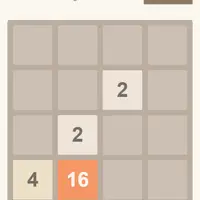
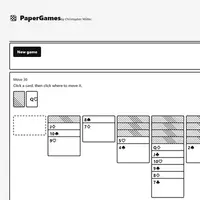
Most of the library is open-source HTML5 games. That means the creator published the game's code and chose a public license that allows other sites to host it. Before one of these games goes on GN Math, both its code and its art and sound are checked for a license that allows hosting, and the original license file stays with the game. The game page names the author, links to the original project and lists the licenses, so anyone can see where the game came from. 2048, Hextris and Klondike Solitaire all work this way.
The rest are free browser games shared by their creators. These include classic Flash games such as Riddle School, which run through Ruffle, an open-source Flash emulator, so no old plugin is needed. They also include Friday Night Funkin' fan mods and indie games like n-gon and sandspiel.
Every game is opened in a real browser, inside the same protected player visitors use, before it is published. Games that fail are not listed, and games that stop working later are taken down. Testing is not a promise that nothing will ever go wrong, but each game was actually checked before it appeared on the site.
Ads: what you will and will not see
GN Math pays for itself with ads from the ad network Adsterra. Here is how they work:
- No ad appears inside a game, and none plays while a game is running in the player.
- Ads do not move the page you are on: when an ad opens, it opens in a separate tab that you can simply close.
- The site uses a notification-style ad in a corner of the screen and, on some pages, an ad that opens the advertiser's page in a new tab behind the current one after a click. If that happens, simply close the extra tab.
- Adult ads are turned off.
- No game shows an ad before it starts.
Talking to kids about ads
Adsterra may use cookies to show and measure ads, as our privacy policy explains, and you can limit ad cookies in your browser settings. Even with these limits, ads come from outside advertisers, so it is worth a short talk with younger kids: what an ad is, why it appears, and why it is fine to ignore it and keep playing. A good rule is never to download anything an ad offers, on any site.
Online play, chat and other players
Parents often ask whether kids can meet strangers through a game. On GN Math, the games are single-player or played by people sharing one device. None of the games in the current library lists online matches or chat with other players on its game page.
Two-player games like Checkers, Four in a Row and Penalty Kick Showdown are played by two people taking turns on the same screen. Games like Compact Conflict and Golden Apple Snake also let you play against computer opponents.
If a game with online features is ever added, its game page is the place to check. The usual rules still apply anywhere online: never share your real name, school, address, phone number or social media with someone you do not know.
Privacy and your data
The site does not ask for a name, email address, birthday or password, because there are no accounts. Your favorites, your recently played list and most game saves are stored in your own browser. That information stays on your device, not on our servers.
There is a trade-off. Because your progress lives in the browser, clearing browsing data, using a private window or switching devices will remove it. On a shared family computer, anyone using the same browser profile can see the favorites list. Some games offer a backup; A Dark Room, for example, gives you a save code you can copy.
Google Analytics measures visits, such as which pages are opened, roughly which country a visit comes from and what kind of device is used. It sets cookies and may collect your IP address, but we do not use it to identify individual visitors, and the privacy policy explains how to opt out. GN Math does not knowingly collect personal information from children under 13. For more general advice, the FTC has a clear guide on protecting your child's privacy online.
Is the content right for every age?
Before a game is added, it is checked for a general audience. Games with graphic or mature content, gambling or casino-style games, and games that try to send players to other sites are left out. Most of the library is light: the puzzle, board and casual categories are full of calm games.
Not every game suits every age, though. The shooting category and action category have games with weapons and combat. A couple of games are meant to be creepy, and some Friday Night Funkin' mods have spooky characters or intense scenes.
Each game page has an About section, controls, tips, game details and an FAQ, so a parent can see what a game is before a child plays it. A few quick checks:
- Read the About section and game details on the game page
- Browse a category together and pick a few games you are both happy with
- Try a game yourself for a few minutes
- Look for the "Desktop and mobile" label if the game will be played on a phone or tablet
Gentle picks for younger kids
If you want a short list of calm, non-violent games to start with, these are good choices. The controls come from each game's page.
Kitty Toy is a cozy pixel-art cat game. Drag food and water into bowls, drag over a cat to pet it, and click to toss balls or place decorations. It works on phones.
Memory Pairs is a card-flipping game where you click or tap two cards at a time and try to remember where each fruit or vegetable is. Tip: start on the small board before trying the bigger ones.
Color Pour Sort has you tap a tube, then tap another to pour, until every tube holds a single color. There is an undo button, so mistakes are easy to fix.
Mini Putt Park is mini golf with nine holes. Press on the ball, drag toward your target and let go to putt. Tip: a softer putt near the hole keeps the ball from rolling past.
sandspiel is a falling-sand toy with no goal or timer. Pick an element and paint with it, then watch sand pile up and water flow.
Math Sprint Game quietly sneaks in some practice: tap Right or Wrong for each simple equation and try to beat your best time.
Games better suited to older students
Some games are fine for teens but worth a look first for younger kids. Station 141 is a short first-person shooter set on a sci-fi station, and Protektor is a top-down shooter where you guard a VIP. n-gon is fast physics combat against geometric enemies. God's Flesh is a short deep-sea horror game, and its page warns that it has strobe lighting effects, so players with photosensitive epilepsy should be careful or skip it. Friday Night Funkin': Creepypasta JP is a horror-themed rhythm mod. None of these are hidden: the category and About section on each game page tell you what kind of game it is before anyone presses Play.
Tips for students: play smart at school
Browser games are best for breaks, lunch and free time. Follow your school's rules about devices and websites. No site can guarantee it will load on every school network, and if GN Math is blocked on yours, respect that and save the games for home. Trying to get around school filters can break school rules, and it is not worth the trouble.
For more on using a school or home laptop well, see our GN Math Chromebook tips. New to the site? Start with what GN Math is and how it works, or jump to our list of the best GN Math games.
How to report a problem
If a game does not load, acts strangely or seems inappropriate, use the contact page to let us know. If an ad looks wrong to you, tell us that too. Broken games are removed, and reports help us find problems faster. You can also read the terms for the rules that apply to using the site.
Safety online is never about one site alone. Good habits, like not sharing personal information, ignoring ads and talking openly about what kids play, matter everywhere. With that in mind, the GN Math homepage is a simple place to start, and all games are there whenever break time comes around.
Frequently asked questions
Is GN Math safe?
For most students, yes. There is no account, no download and no personal information to enter. Games play in a sandboxed player on the site, and ads never appear inside a game. The site does use some ads that open in a new tab, so close any tab you did not mean to open.
Does GN Math have pop-ups?
The games cannot: they are sandboxed, so a game cannot open pop-ups or send you to another website. The site itself does use some ads that open the advertiser's page in a new tab after a click on the page, plus a small notification-style ad in a corner. Ads never play inside a game.
Can GN Math give my computer a virus?
Nothing on GN Math asks you to download or install a file, and games run in the browser. As anywhere online, keep your browser updated and never download files an ad offers you.
Do I need to make an account or give an email?
No. There are no accounts, and the site does not ask for an email address. Favorites, recently played games and most saves are kept in your own browser.
Does GN Math use tracking cookies?
GN Math uses Google Analytics cookies to measure visits, and its ads come from the ad network Adsterra, which may also use cookies. The privacy policy explains both and how to limit them.
Can kids chat with strangers on GN Math?
The site has no chat, and none of the current games lists online play or chat on its game page. Two-player games are played by two people sharing one device.
Is it okay to play GN Math at school?
Only when your school allows it. Treat games as something for breaks and free time, follow your school's rules and respect any blocks on the school network.
Related guides
- What Is GN Math? A Simple Guide to the Free Games Site
- 15 Best GN Math Games to Play Right Now
- Riddle School Unblocked: A Guide to All 7 Games in Order
- Best 2 Player Games on GN Math to Play With a Friend on One Device
- How to Play GN Math Games on a Chromebook: Tips for Smooth Play
Ready to play?
Head back to GN Math for 126 free unblocked games - no download, no sign-up.