Best 2 Player Games on GN Math to Play With a Friend on One Device
Sometimes the best break is a quick match against the person sitting next to you. Every game on GN Math runs right in your browser with no download and no account, and ten of them let two people play on the same computer, tablet or phone. You will find all of them in the 2-player category.
One honest note before you start: these are turn-based games. You do not split the keyboard and play at the same time. Instead, one person makes a move, then the other takes the mouse, the touchpad or the phone. Most of the list is classic board games, plus one soccer shoot-out and one small war-map game. For each pick below you will see how the two of you share the device, how to switch on the two-player mode and a tip for winning. Further down there are picks for playing against the computer when you are on your own.
Four in a Row
Four in a Row is the easiest game here to explain to a friend in ten seconds. You take turns dropping discs into a grid of seven columns, each disc falls as far down as it can, and the first person to line up four of their color wins. Lines can go across, up and down or on a diagonal.
How you share the device: pick 2 Player (local), then take turns clicking or tapping the column you want. Keyboard players can choose a column with the arrow keys and press Enter. On a phone, just hand it across after each move. Tip: the middle column touches the most possible lines, so whoever claims it first usually has more ways to win.
Checkers
Checkers uses the familiar 8x8 board and twelve pieces each. Pieces move diagonally, you capture by jumping, and a piece that reaches the far side is crowned and can move backward. Captures are forced in this version, and one jump can chain into several.
How you share the device: choose 2 Player (local) and alternate turns on the same screen. Click or tap a piece, then the square where it should land. Undo is there if someone taps the wrong square, and an unfinished game stays saved in your browser so you can finish it later. Tip: because jumps are required, you can sometimes offer a piece on purpose to pull an enemy piece into a spot where you capture two back.
Penalty Kick Showdown
Penalty Kick Showdown is the only sports game on the list and the loudest one in a classroom. Each side takes five penalties, and you switch between shooter and goalkeeper every turn. The shooter picks one of nine zones in the goal and then stops a moving power bar. The keeper picks a zone to dive to. A tie after five rounds goes to sudden death.
How you share the device: choose 2 Players, type in both names and pick teams. Then pass the mouse, or the phone, back and forth each kick. The important rule is that the shooter looks away while the keeper picks a dive zone, otherwise the whole game is too easy. Tip: a full-power shot aimed at a corner can sail wide, so leave a little power in reserve.
Backgammon
Backgammon mixes dice luck with planning. Each player has 15 checkers that race around the board in opposite directions. Roll, move by the numbers on the dice, bring every checker into your home board, then bear them off. Clear all 15 first and you win.
How you share the device: open Menu, pick 2 Player (local) and start a new game. On your turn, roll the dice, then click or tap a point holding your checker and the point you want to move to. The other player does the same when you are done. Tip: a single checker on a point can be hit and sent to the bar, so try to keep at least two together whenever you can.
Gomoku
Gomoku is five in a row on a 15x15 grid. Black always moves first, stones never move once placed, and nobody gets captured. The first person to build an unbroken line of five wins straight away.
How you share the device: choose 2 Player (local) and take turns placing stones. Click or tap an empty point, or use the arrow keys and Enter. On a small phone the points sit close together, so the person moving should take a second to tap the right spot. Tip: a line of three with open space on both ends is a warning sign. Block it before it becomes four.
Universal Reversi
Universal Reversi is a disc-flipping game with a strange board. You trap your opponent's discs in a straight line between two of yours, and the trapped discs flip to your color. In this version the edges wrap around, so a line that leaves one side comes back in on the other, and corners are not safe any more.
How you share the device: open Game Settings, set Players to Human vs Human, then press Reset Game. After that you simply alternate clicks or taps on the cells marked with a dot. Board sizes go from 6x6 up to 10x10, so pick a small board for a quick game. Tip: use the arrow keys or the PAN buttons to slide the view and spot flips that cross an edge.
Mancala
Mancala is a seed-sowing game that looks simple and gets clever fast. Each player owns a row of bowls and a store. On your turn you scoop up every seed in one of your bowls and drop them one at a time around the board. Most seeds in your store at the end wins.
How you share the device: tap 2 Players 1 Screen on the start screen. Each player clicks or taps their own bowls on their turn, and the board turns to fit the screen, so it works well on a tablet lying flat between you. Tip: if your last seed lands in your own store you get another turn, so count before you move.
Dominoes
Dominoes uses a double-six set of 28 tiles. You match a tile to one of the two open ends of the line, draw from the stock when nothing fits and try to empty your hand first. There is also a second variant called Triangles, with three-sided tiles where every shared corner has to match.
How you share the device: choose Same device and set the number of players to 2, 3 or 4. Since your hand is secret, each player taps Show my tiles only on their own turn while the others look away. That makes it one of the few games here that works for a small group, not just a pair. Tip: get rid of tiles with high numbers early, because if the line gets blocked, the lowest total left in hand wins.
Snakes and Ladders
Snakes and Ladders is pure luck, which makes it the fairest choice when an older and a younger player are sharing a device. Roll the die, move your token, climb the ladders and slide down the snakes. First to the last square wins.
How you share the device: in the setup, choose 2, 3 or 4 players and set Computer to 0, then everyone takes turns clicking or tapping Roll. There is a 100-square board and a shorter 50-square board for little kids. Tip: pick the rule that lets spare pips go to waste at the finish if you want a shorter game.
Compact Conflict
Compact Conflict is the longest game on this list, but a standard match still lasts only 12 turns. Each player starts with one temple on a random map. You get three moves per turn to send armies into neighboring regions, temples produce new soldiers, and whoever holds the most regions when the turns run out wins.
How you share the device: on the setup screen, set two or more seats to human. Two, three or four people can play, and you can fill empty seats with computer players. Each person clicks or taps through their three moves, then ends the turn and hands over. Tip: grab the neutral temples early, since each one you hold adds a soldier every turn.
Playing alone? Games with a computer opponent
Every game above also works when you are on your own. Four in a Row, Checkers, Gomoku, Backgammon and Dominoes each have an Easy, Medium and Hard computer. Universal Reversi has five difficulty levels, Mancala lets you choose between several computer players, and Compact Conflict's computer comes in four moods from Nice to Evil. Penalty Kick Showdown has a 1 Player mode against the CPU, and Snakes and Ladders can fill up to three seats with computer players.
A few more games on GN Math are built only for one player against the computer, and they are good practice for your next rematch with a friend:
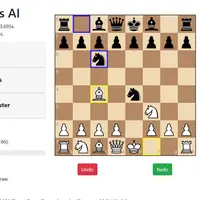
- Chess vs Computer: you play White and set how many moves ahead the computer looks, from 1 to 5. There is no two-human mode, so it is strictly for solo practice.
- Fleet Strike: hide five ships on a grid and trade shots with a computer that aims at the most likely squares. One player only.
- Paddle Duel: a retro table tennis match against a fast but beatable computer paddle, first to 10 points.
- Golden Apple Snake: pick VERSUS to race a computer snake to ten apples on the same board.
Quick chooser
Not sure which one to open? Match the game to the moment:
- Five minutes or less: Four in a Row or Penalty Kick Showdown.
- Playing with a younger brother or sister: Snakes and Ladders.
- Three or four people around one screen: Dominoes, Snakes and Ladders or Compact Conflict.
- Two serious thinkers: Gomoku, Universal Reversi or Checkers.
- A bit of luck to keep it close: Backgammon or Mancala.
- Only one phone between you: any of them. All ten work with touch.
Tips for sharing one device
Turn-based games are easy to share, but a few habits keep things friendly:
- Agree who goes first before you start, or let the game decide. Black always opens in Gomoku, for example.
- Hand the device over only when the move is finished. Clicking during someone else's turn is the fastest way to start an argument.
- Use Undo for honest mistaps, not to take back a bad move after you see the reply. Agree on that rule up front.
- For games with secrets, such as the keeper's dive in Penalty Kick Showdown or your hand in Dominoes, the other player looks away.
- Unfinished games in Checkers, Four in a Row, Gomoku, Backgammon, Dominoes and Snakes and Ladders are saved in your browser, so you can pause a match and finish it later on the same device.
- Play a best-of-three. One loss is luck; two is a reason to practice against the computer.
Frequently asked questions
Can two people play GN Math games on one keyboard at the same time?
Not right now. The two-player games on GN Math are turn-based, so you take turns on the same computer, tablet or phone instead of pressing keys at the same moment. Check each game's page to see how its two-player mode is switched on.
Which GN Math games let you play a friend on the same device?
Ten games: [Four in a Row](/four-in-a-row/), [Checkers](/checkers/), [Penalty Kick Showdown](/penalty-kicks/), [Backgammon](/backgammon/), [Gomoku](/gomoku/), [Universal Reversi](/reversi/), [Mancala](/mancala/), [Dominoes](/dominoes/), [Snakes and Ladders](/snakes-and-ladders/) and [Compact Conflict](/compact-conflict/). They are all collected in the [2-player category](/category/2-player/).
Do the 2 player games work on a phone or tablet?
Yes. All ten work with touch, so you can pass one phone or tablet back and forth. A tablet lying flat between two players is especially comfortable for the board games.
Can more than two people play?
In a few games, yes. [Dominoes](/dominoes/), [Snakes and Ladders](/snakes-and-ladders/) and [Compact Conflict](/compact-conflict/) each allow up to four players on the same device.
What if my friend is not around?
All ten games can also be played against the computer, and most let you pick the difficulty. For extra solo practice, try [Chess vs Computer](/chess-vs-computer/), [Fleet Strike](/fleet-strike/) or [Paddle Duel](/paddle-duel/).
Do I need an account to play with a friend?
No. GN Math has no accounts. Open a game, pick its two-player mode and start. Games that save an unfinished match keep it in your own browser.
Related guides
- What Is GN Math? A Simple Guide to the Free Games Site
- 15 Best GN Math Games to Play Right Now
- Riddle School Unblocked: A Guide to All 7 Games in Order
- How to Play GN Math Games on a Chromebook: Tips for Smooth Play
- Is GN Math Safe? What Students and Parents Should Know
Ready to play?
Head back to GN Math for 126 free unblocked games - no download, no sign-up.